Subterranean termite activity along the Montana Hi-Line remains heavily subterranean, requiring soil moisture and ground-level structural entry points to survive prolonged sub-zero winter temperatures. In the Downtown…
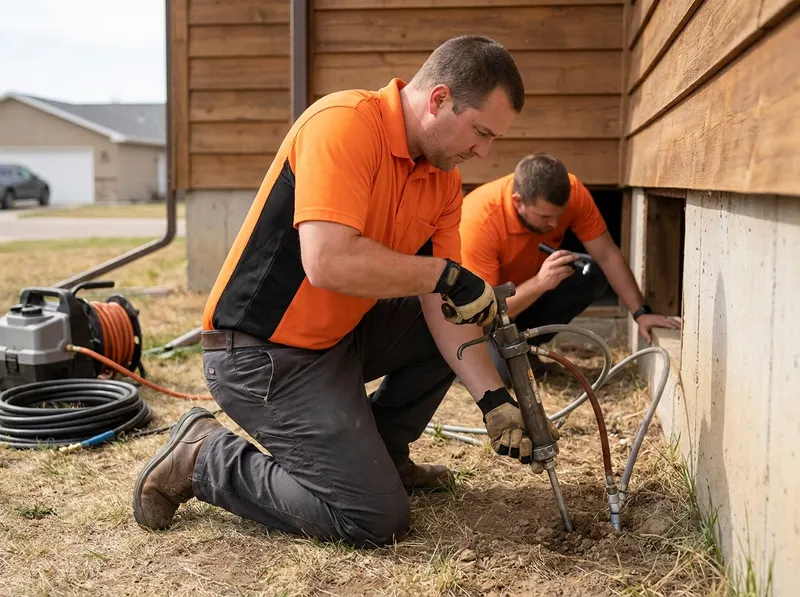
Subterranean termite activity along the Montana Hi-Line remains heavily subterranean, requiring soil moisture and ground-level structural entry points to survive prolonged sub-zero winter temperatures. In the Downtown Havre Historic District, older stone and unreinforced masonry basements with direct timber-to-soil contact create common infiltration pathways, while concrete-slab properties around Meadowlark and Devonshire face risks along plumbing penetrations and expansion joints. Inspections evaluate mud shelter tubes traversing stem walls, hollowed framing sill plates, and frass accumulations behind utility penetrations. Structural integrity assessments also check moisture retention in crawlspaces near the Montana State University Northern Campus Area and Sunnyside, where foundation freeze-thaw cycles form subterranean hairline fractures that termites utilize during spring ground warming.
Treatment selection depends on architectural profile and soil conditions. Continuous liquid non-repellent termiticide barriers, such as fipronil, fit full-basement and continuous-footing properties in Highland Park and the Saddle Butte area. This involves trenching 6 inches wide by 6 inches deep along exterior foundation perimeters to create an undetectable lethal transfer zone that workers carry throughout the nesting colony. Conversely, low-clearance crawlspaces or properties adjacent to high water tables near North Havre favor slow-release insect growth regulator (IGR) bait stations positioned at 10-foot to 15-foot intervals. The structural trade-off centers on disruption versus colony control speed: liquid perimeter trenches provide immediate exclusion barriers but require trenching and potential concrete drilling through garage aprons; bait stations require zero ground drilling and eliminate subterranean nests through molting disruption, but require 60 to 120 days of bait consumption to yield full colony collapse.
Over-the-counter surface sprays purchased at local hardware retail outlets fail against subterranean termites because repellent surface sprays merely divert workers to deeper, unseen structural timbers within walls. Eradicating colonies requires non-repellent transfer chemistry or structural bait ingestion that targets the reproductive queen. Treatments proceed in three clear stages: 1. Complete visual probe and acoustic evaluation of load-bearing timbers and baseline foundation soil mapping. 2. Mechanical perimeter trenching, sub-slab foundation rodding, or locked tamper-resistant exterior bait station installation. 3. Documentation of treatment volumes, linear footage barriers, and a scheduled 90-day follow-up inspection to verify the halt of all active gallery feeding.
Every job gets a firm, written price after a free on-site visit.
Tell us about your subterranean termite inspections and treatments job in Havre and we'll send a clear, written quote, usually the same day.
 Varnexa Pest Defense