Commercial facilities in the Downtown Havre Historic District and industrial storage hubs near North Havre face unique pest vectors driven by extreme seasonal temperature shifts along the Hi-Line. During the sudden…
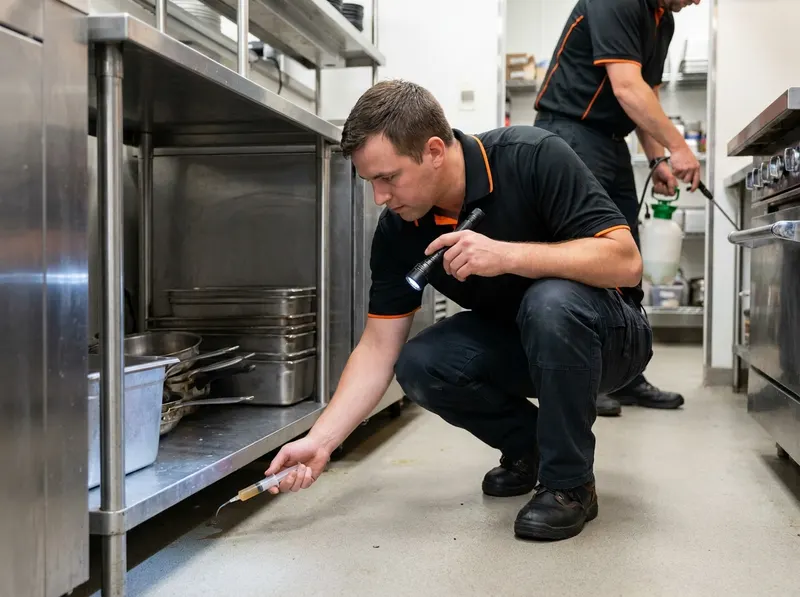
Commercial facilities in the Downtown Havre Historic District and industrial storage hubs near North Havre face unique pest vectors driven by extreme seasonal temperature shifts along the Hi-Line. During the sudden autumn freezes typical of Northern Montana, deer mice (*Peromyscus maniculatus*) and Norway rats migrate from grain-handling corridors and railway spurs directly toward heated commercial buildings. In food preparation environments, standard over-the-counter insecticides fail because grease deposits neutralize basic residual sprays, while improper placement risks adulterating prep surfaces. Commercial defense requires structural sealing around dock levelers, utility penetrations, and floor drains, paired with targeted, non-spray monitoring that satisfies Montana Department of Public Health and Human Services (DPHHS) retail food inspection protocols.
Facilities near Saddle Butte and the Montana State University Northern Campus Area often manage multi-use physical footprints containing both dry dry-goods storage and open prep zones. If a facility operates a high-moisture kitchen, the critical vulnerability is typically German cockroach harborage within motor housings, hollow stainless table legs, and quarry tile grout lines. In contrast, dry-pack warehouses and agricultural feed suppliers in Hill County battle stored-product pests such as sawtoothed grain beetles and Indian meal moths. A facility facing localized storage beetle activity requires insect growth regulators (IGRs) and targeted pheromone monitoring rather than heavy chemical washdowns that disrupt active supply chains.
1. Structural diagnostic: Technicians map all exterior utility entry points, inspect overhead garage doors for damaged astragal seals, and assess floor drain traps across the entire building footprint.
2. Targeted interception: Technicians install anchored, tamper-resistant rodent monitoring stations along external perimeter walls at 30- to 50-foot intervals and deploy non-toxic pheromone traps in interior dry storage zones.
3. Non-chemical exclusion: High-density copper mesh, heavy-gauge steel kick plates, and expanding elastomeric foams seal daylight gaps exceeding 1/4 inch around pipe sleeves and door thresholds.
4. Documentation and compliance: Every visit records device scan counts, bait consumption percentages, and sanitation remediation steps into a facility logbook suitable for state sanitarian review.
Every job gets a firm, written price after a free on-site visit.
Tell us about your commercial kitchen and warehouse pest defense job in Havre and we'll send a clear, written quote, usually the same day.
 Varnexa Pest Defense